






General Information About Auxiliary Lights
If you drive on roads with little traffic and long straight stretches, you should choose an auxiliary light with long range. However, it is important not to focus only on how far the light reaches. In our opinion, you should have a light with a width of around 30 metres to provide plenty of light in the ditch and forest, and that reaches around 75–200 metres in front of the vehicle. Under good conditions, reaction time plus braking distance is 70 metres from 100 km/h, and it takes about 3 seconds to travel 100 metres at the same speed. Based on this, the beam pattern should be wide and provide enough light 6 seconds ahead to detect wildlife and other obstacles. The best beam pattern for this is Combo Beam – it has lenses for a relatively wide beam pattern, while also having some lenses that cast the light further. There is also a variant called Spot, which throws the light further. It is tempting to have a really powerful auxiliary light, but remember that your eyes adapt in the dark. If you have extremely good high beams and then dim them, your eyes will have adapted to the strong light. This means you will see worse with the dipped beam, as visibility becomes more limited. Moderate is actually best.
ECE 112 MARKING
When buying an auxiliary light, it is important that it is marked with ECE 112. This is a European standard that defines auxiliary lights. If the light does not have this marking, you risk fines and remarks during vehicle inspection.
VALUES USED TO MEASURE LIGHT
WATT
A value that has been used to measure light since the days of incandescent bulbs. Watt actually tells you how much power the lamp consumes, but this unit is often misused when theoretical wattage is stated for the LED chips. The LEDs are often not run at this power because it becomes too hot. So, the best option is to have an auxiliary light with as low wattage as possible while still providing the best possible light.
LUMEN
A good way to measure the amount of light. However, it is less relevant for an auxiliary light because you should instead look at where the light is directed. A lamp can have thousands of lumens but no lenses, which means that a lamp with only a few hundred lumens and good light control can work much better than one with a higher lumen output.
LUX
A value that describes how strong a lamp shines at a certain distance, which makes it useful for comparing different lamps. 1 lux is often used to show how far a lamp reaches, but it is actually too low a figure to be particularly useful. Around 10 lux is needed to identify an animal or a person without reflective clothing. Many suppliers tend to cheat with these figures (especially foreign suppliers). For example, a kit containing two auxiliary lights may be specified with doubled range – that is not true. Many also specify the range for 0.25 lux, which is completely irrelevant because humans cannot distinguish objects in that light. For example, 1 lux is required to read a newspaper and around 10 lux is needed to see things clearly.
EXAMPLE
A lamp measured at 1 lux at a full 800 metres may have a very narrow beam pattern, meaning for example that roe deer standing in the ditch in front of the vehicle are not visible. Meanwhile, a lamp measured at 1 lux at 480 metres normally has a much wider beam pattern, which is usually preferable because it provides a better overview in front of the vehicle.
KELVIN
The temperature/colour of the light. A bulb with a value of 3000K is perceived as more yellow and is called warm white. If the value is 6000K, the light is perceived as whiter and is therefore called cool white. Most auxiliary light manufacturers use high Kelvin values because the cooler light is perceived as stronger, but the colder the light, the more it is reflected by things like road signs. By choosing a slightly warmer light, you as the driver can avoid being as dazzled.
WHAT IS A REFERENCE NUMBER?
The reference number is a value found on all E-approved high beams and auxiliary lights. According to ECE regulations, the total reference number for high beams and auxiliary lights on a vehicle may not exceed 100. For example, if the vehicle has a reference number of 20 marked on each original headlamp lens, the maximum total reference number of aftermarket auxiliary lights may be 60. The reference number is printed on the lens of all approved lamps. It is also a good indicator of how much light can be produced by a lamp. The higher the value, the more light and stronger illumination. The value is a combination of several measured values, such as intensity, range, and range in relation to width. Therefore, some lamps are equipped with two cables where connection with one cable meets the requirements while the other does not, but shines more strongly.
NOTE! Sweden has a national exemption from the rules regarding reference numbers – there is therefore no reference number limiting the number of auxiliary lights on your vehicle. However, the requirement that all lighting must be E-approved still applies. Abroad, there are limitations based on reference numbers, so it is a good idea to make sure the auxiliary lights can be disconnected if your reference number is too high and you intend to drive outside Sweden.
HOW TO KNOW HOW GOOD AN AUXILIARY LIGHT IS
The best thing is to look at the beam pattern diagrams. At Work System, we also always send our auxiliary lights for independent testing to quality-assure our range.
Our range and examples of installations
Model-specific kits
|
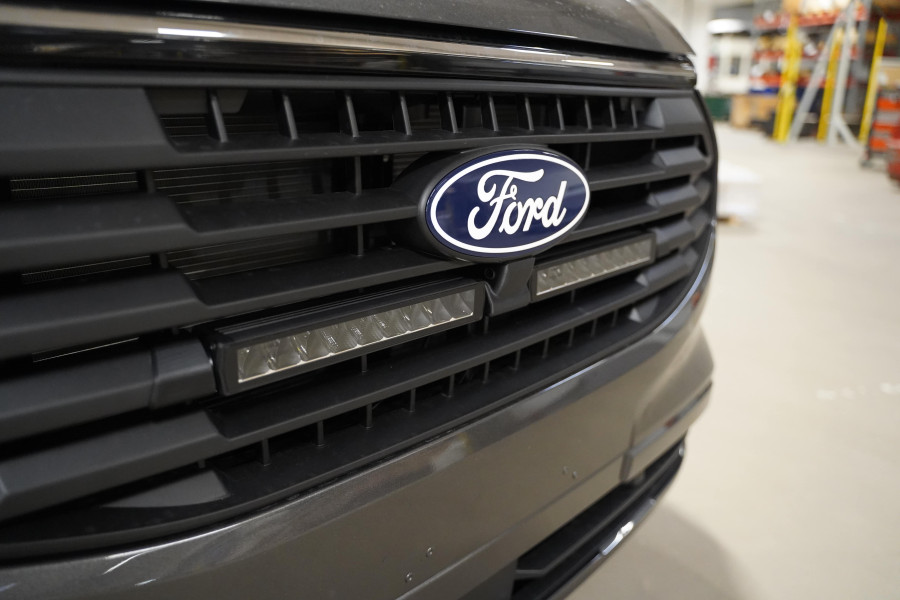
If you ask us, the absolute best option to ensure great light while maintaining the vehicle’s safety functions is our model-specific kits. They are placed high in the grille using neatly designed brackets that also make installation quick and easy. Our model-specific kits usually consist of two auxiliary lights that are slightly angled away from each other to create an improved beam pattern even outside the actual roadway. If there is no model-specific kit available for your vehicle, our sales team will be happy to help you find a solution. |
2x Siberia Intense Xperience 12"The integrated dual-row 12" bars are the ultimate choice for larger vehicle models where there is room for powerful lighting. In Xperience mode, they reach an impressive 772 metres (1 lux) and generate 16,113 lumens. This means they not only shine far ahead but also provide strong illumination along the roadside.The product is equipped with position lights that are only installed upon request, as they may be illegal in traffic. The lights can be used in E-mode (EU-adapted), but this reduces the lighting output. For a more discreet solution, Explosion Slim or Firefly is recommended instead, as they offer similar range in E-mode. 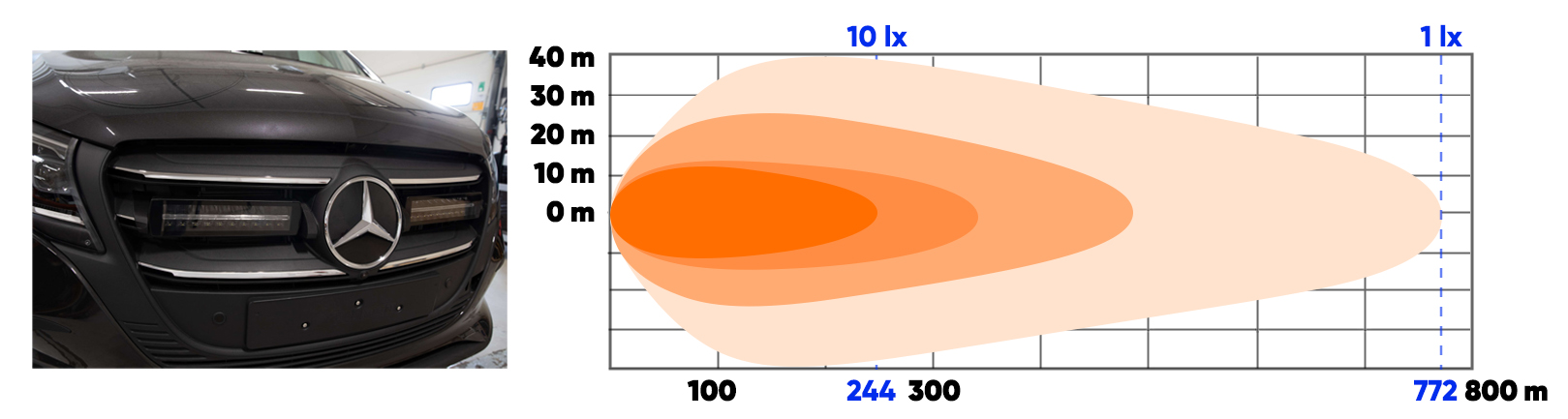
|
2x Siberia Outlaw UDX 8"The dual-row 8" bars are adapted for smaller vehicle models and provide maximum light where space is limited. With a range of 593 metres (1 lux) and a light output of 11,516 lumens in Xperience mode, they combine long range with broad roadside illumination.Just like the 12" model, this one has position lights as standard, but they are only installed upon specific request. E-mode is available, but may limit the full potential of the light. For a more discreet installation, Explosion Slim or Firefly is a better choice. 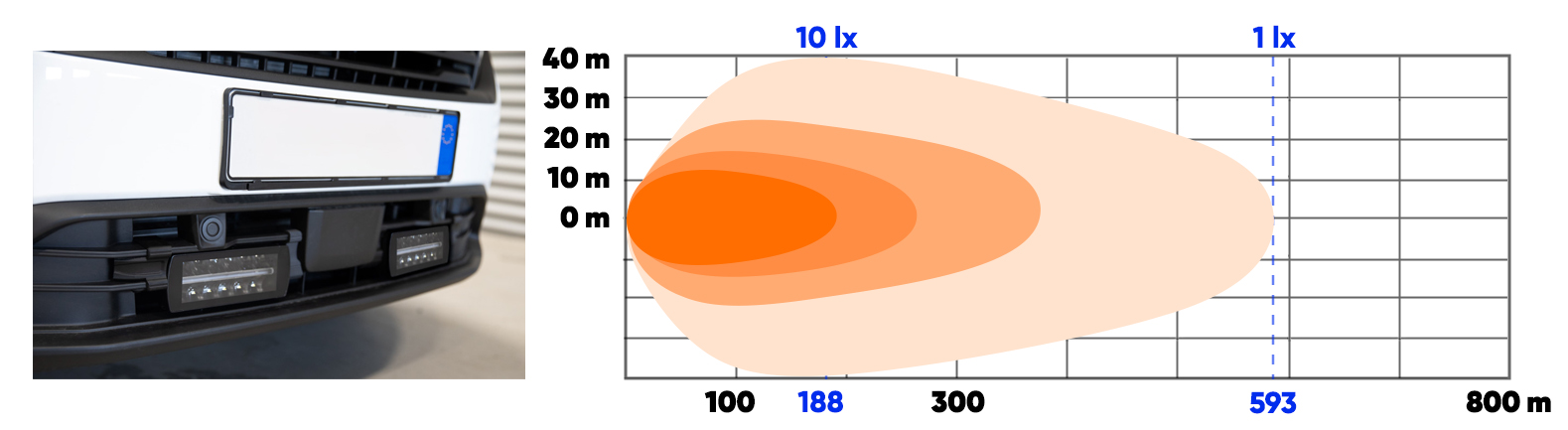
|
2x Explosion Slim 280mmExplosion Slim is a single-row LED bar for those who want affordable auxiliary lighting without affecting the aesthetics of the vehicle. It has EU-approved performance with a range of 448 metres (1 lux) and a combined beam pattern that provides both width and reasonable length of light.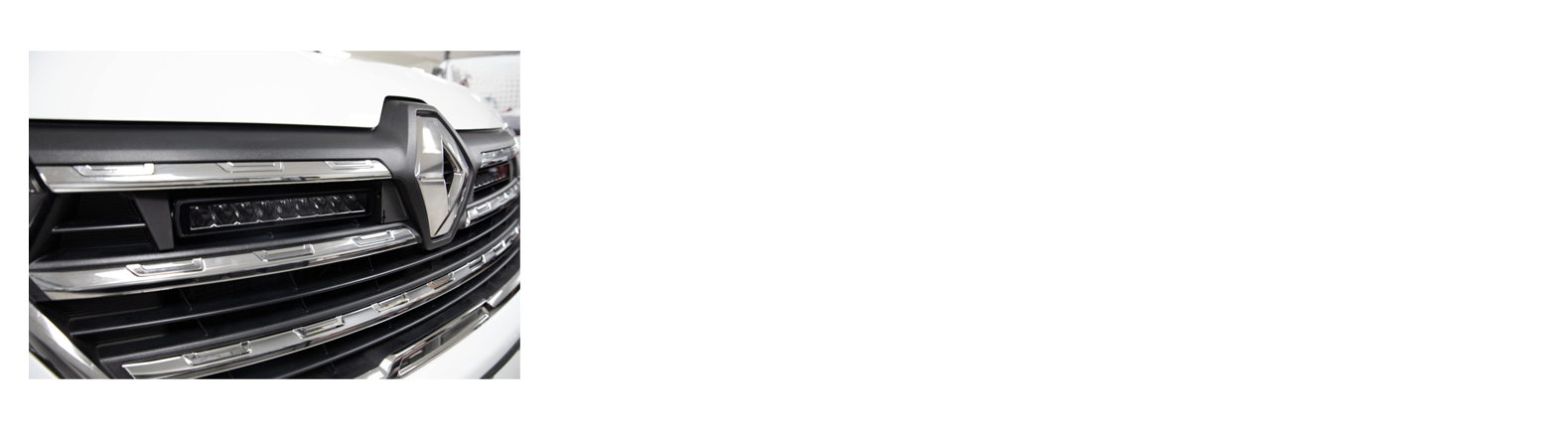 |
2x Firefly 10"Firefly 10" offers an elegant design and reliable light output for those who want to combine function and style. This E-approved LED bar has a range of 510 metres (1 lux) and a light output of 10,020 lumens. Position lights are included but are only installed upon request, as they may be illegal in traffic.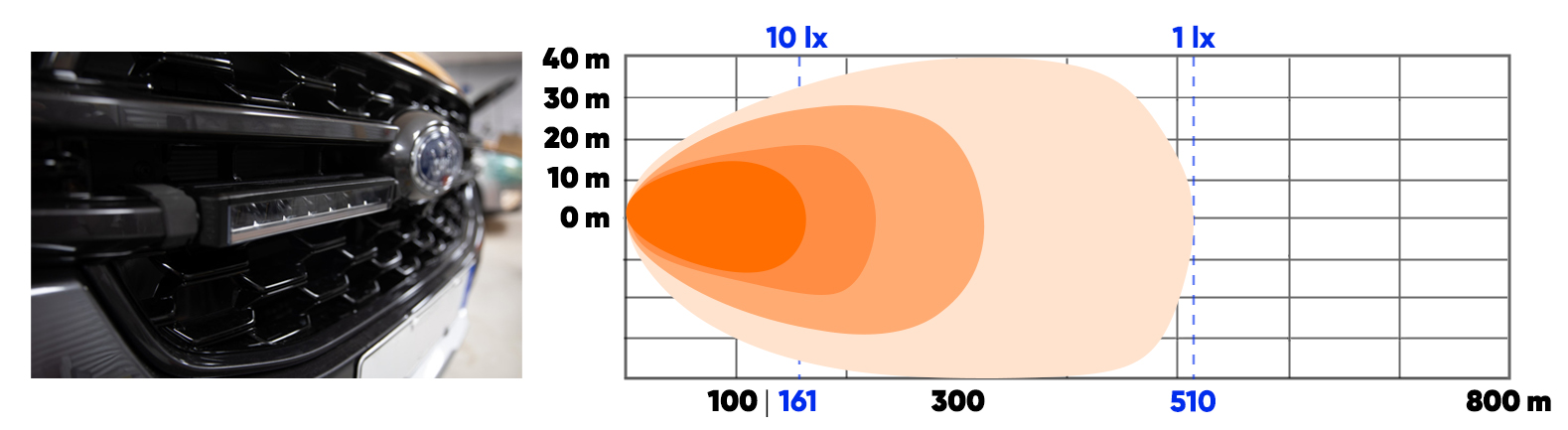 |
| Vehicle Model | Available LED Bar Kits |
|---|---|
| Ford Custom 2024- | |
| Ford Ranger 2023- Wildtrack | |
| Mercedes Vito 2024- Limited grille | |
| Renault Trafic 2022- | |
| Mercedes Vito 2021-2023 NOTE! Non-perforated grille | |
| Ford Courier 2024- | |
| Toyota Hilux Invincible 2024- |
Integrated Auxiliary Light in the License Plate Bracket
Nuuk E-line DUO Led Bar
Article number: 930-SLD-NK-ELINE
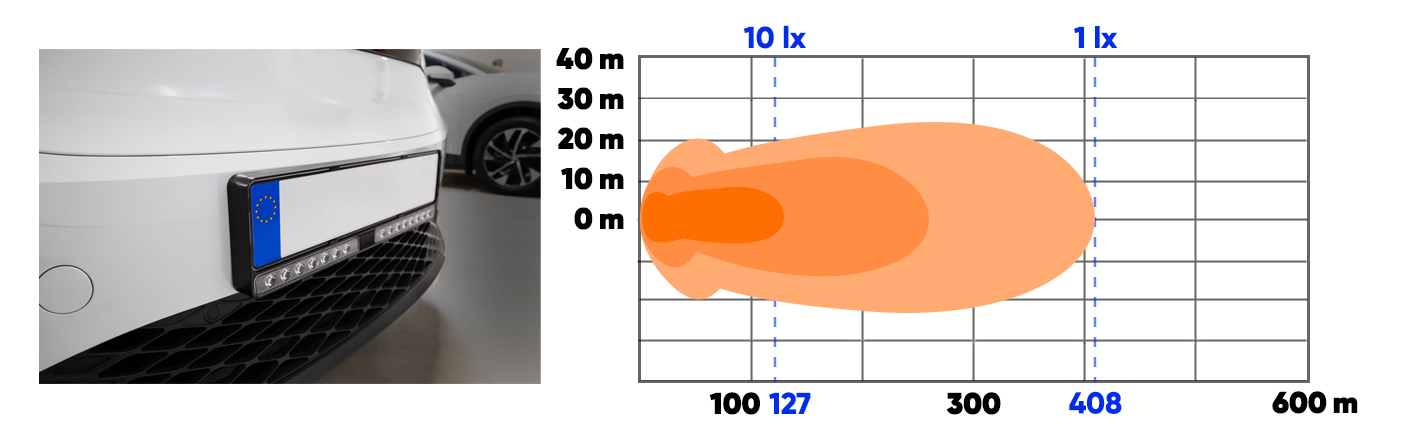
If you do not have any specific preferences and simply need a good light, an auxiliary light integrated into the license plate bracket is our recommendation. It offers a discreet and simple installation without causing any additional modification to the vehicle.
LED Bars
If you want a strong high beam but also a simple and slim solution, an LED bar is the right choice for you. On many vehicle models, it is also possible to make a recessed installation for a more attractive appearance. Such an installation requires knowledge of where and how the LED bar can be mounted, so also see our model-specific kits further up the page. If you are unsure, feel free to ask our sales team/technicians for help.
Explosion MaxArticle number: 930-EXP-52-M-C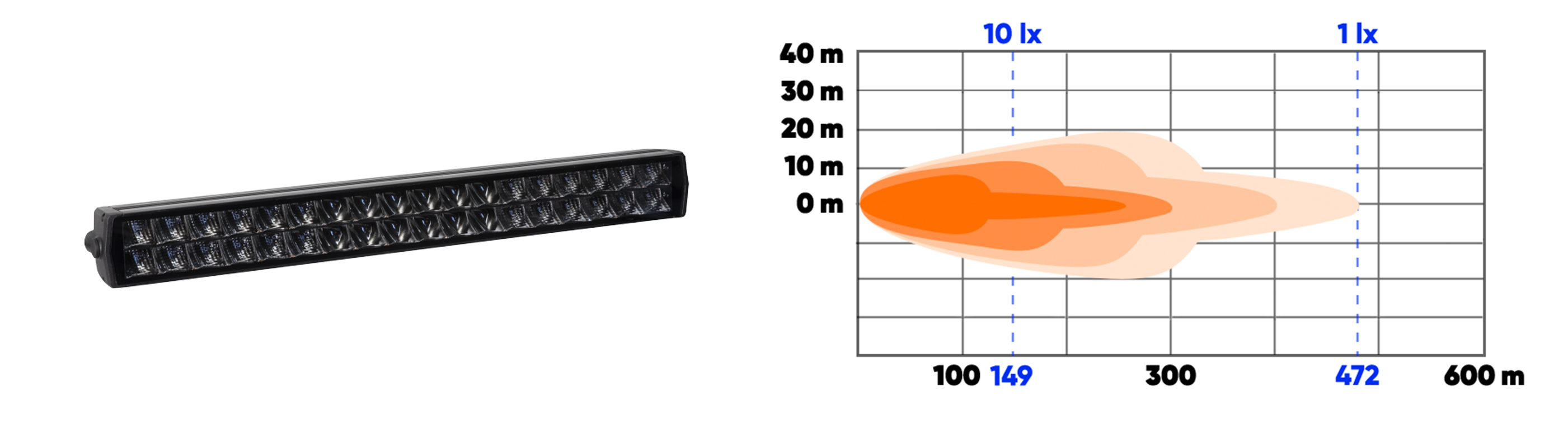 |
| A dual-row bar with combo beam, providing both good length and width of light. Dimensions L:520 H:58 W/D: 52 |
Explosion SlimArticle number: 930-EXP-52-S-S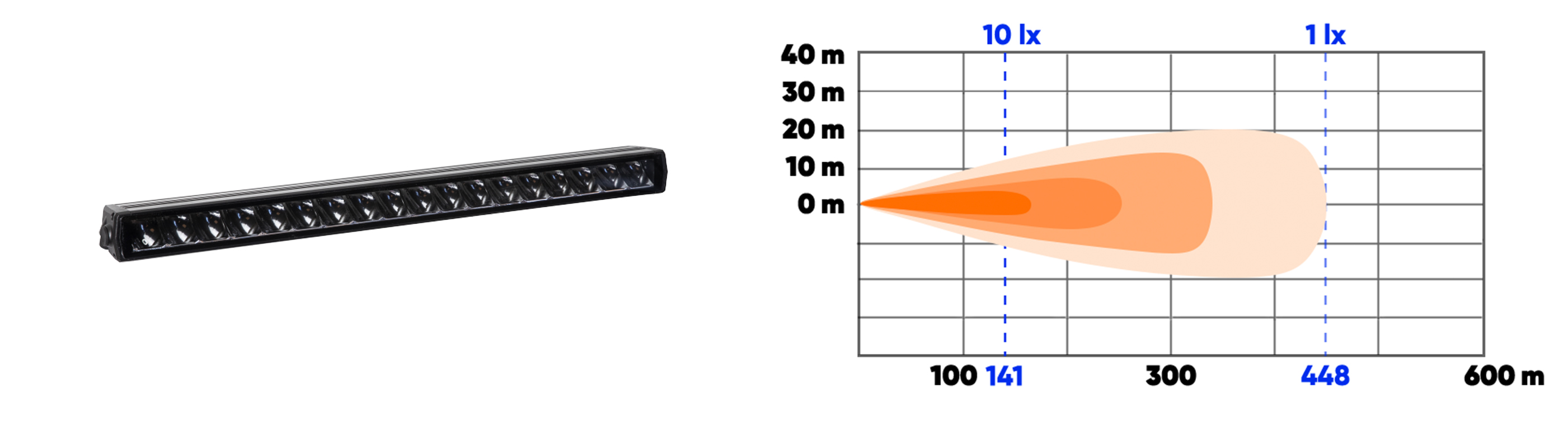 |
| A modern slim auxiliary light bar. The bar has spot beam, which provides good light range. Dimensions L:520 H:40 W/D: 52 |
Siberia DRC 32Article number: 930-SBR-DRC-32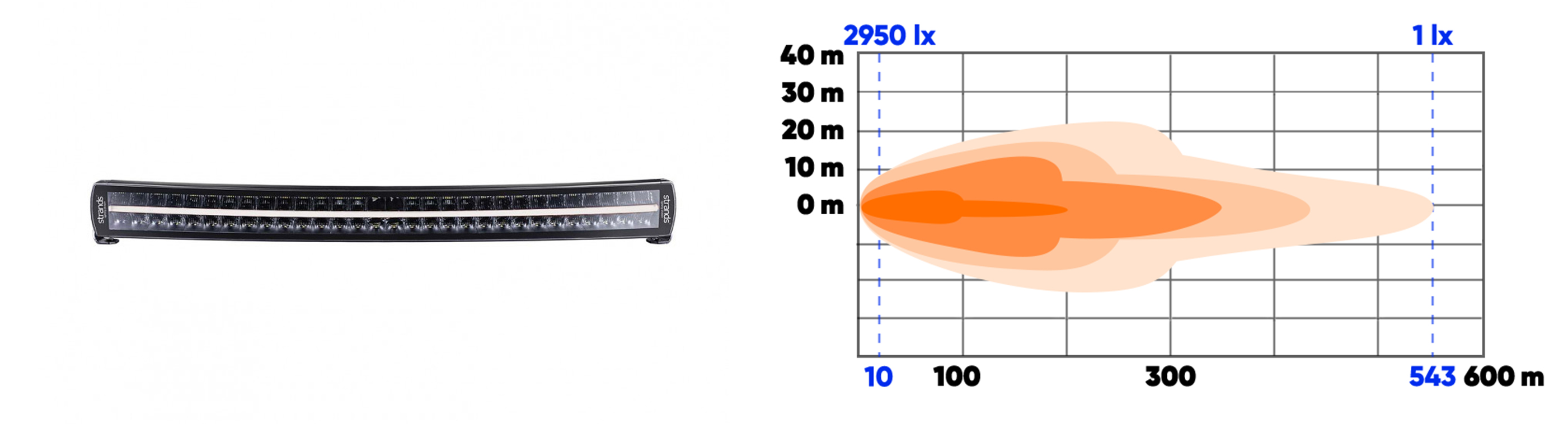 |
| A dual-row curved LED bar. Created with exclusive material choices and innovative features. Provides an optimised beam pattern with maximum width without losing length. Comes with dual position lights – choose between orange and white. Dimensions L:823 H:89 W/D:72 |
Siberia DRC 42Article number: 930-SBR-DRC-42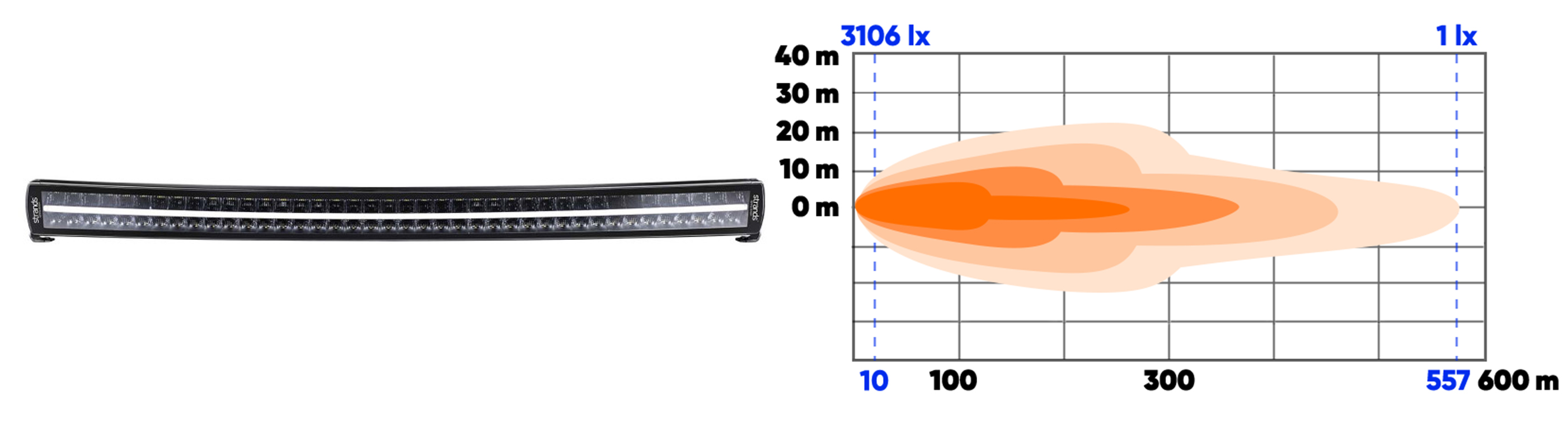 |
| A dual-row curved LED bar. Created with exclusive material choices and innovative features. Provides an optimised beam pattern with maximum width without losing length. Comes with dual position lights – choose between orange and white. Dimensions L:1078 H:89 W/D:72 |
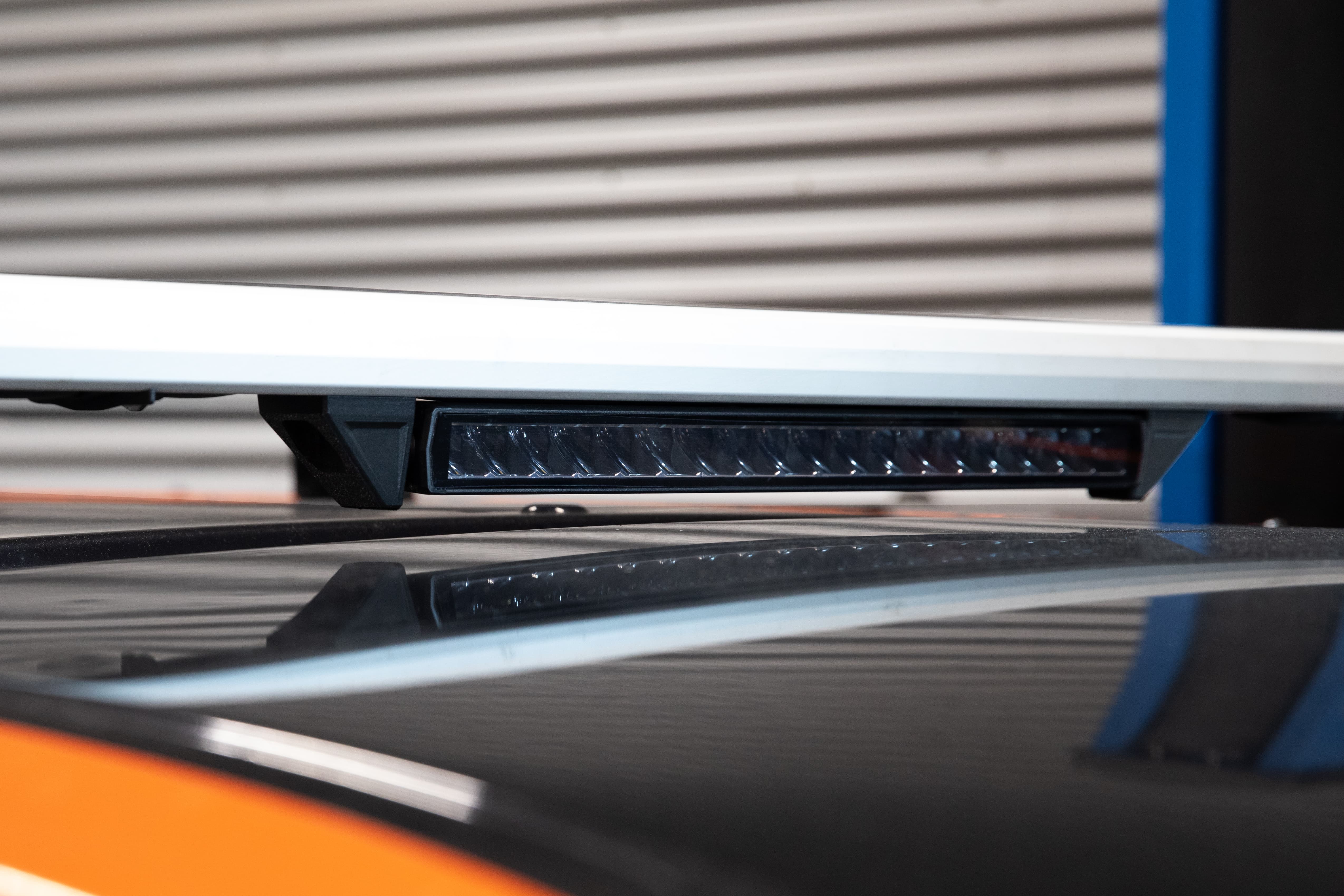
Auxiliary Lights on a Roof Rack (COMING SOON)
We will soon also offer installation of auxiliary lights on roof racks using specific mounting kits. NOTE! This requires that you have/purchase our Work Bar roof racks for your vehicle.
ROUND AUXILIARY LIGHTS
If you want a lot of light, the large round auxiliary lights are the best choice. Such an installation requires knowledge of where and how these can be placed on your specific vehicle, and in some cases it is unfortunately not possible due to the vehicle’s sensors. If you are unsure, feel free to ask our sales team/technicians for help.
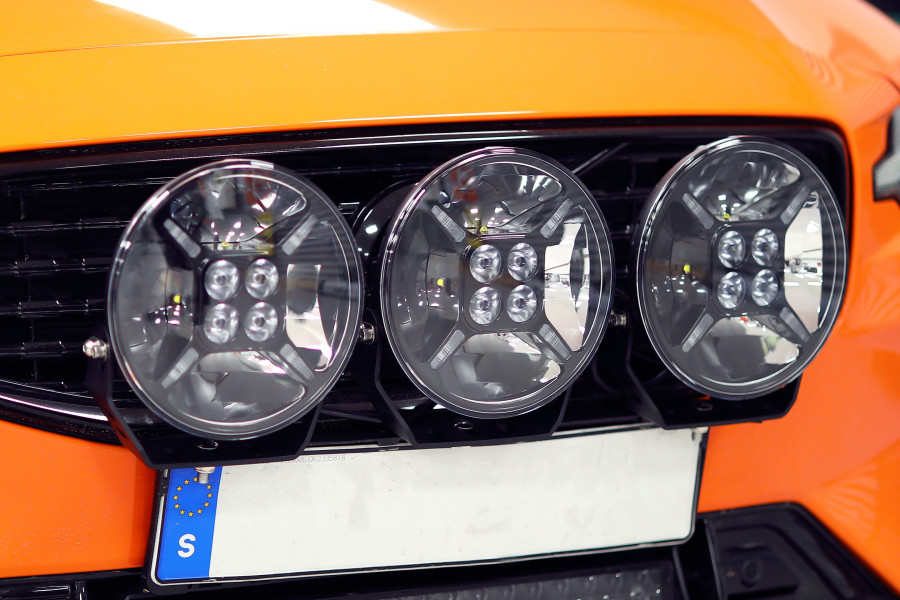
Explosion D22 Combo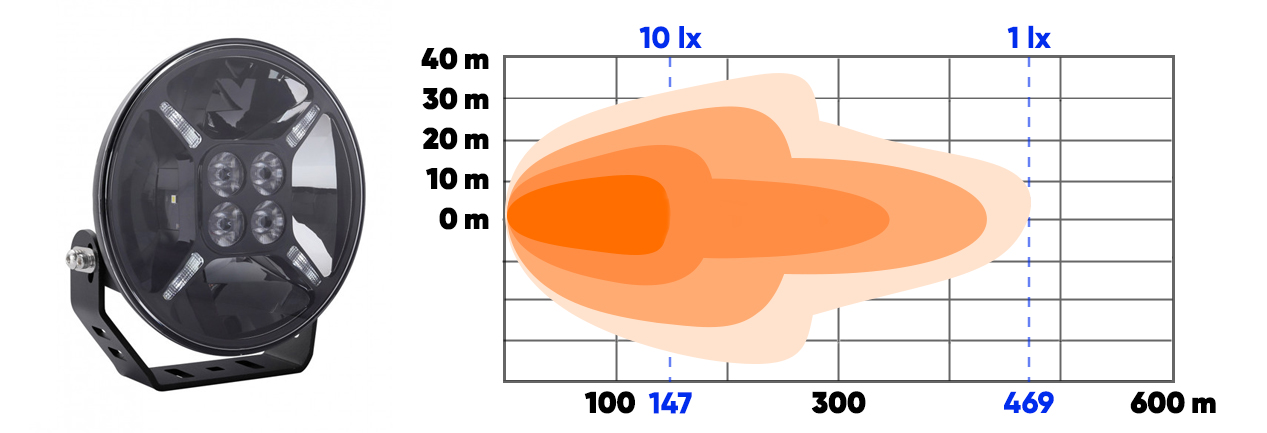 Article number: 930-EXP-D22-C-BL |
A larger round auxiliary light with an appealing design. The light uses reflector technology and lens technology to create a good beam pattern that is both long and wide. Diameter: 220mm |
Explosion D18 Combo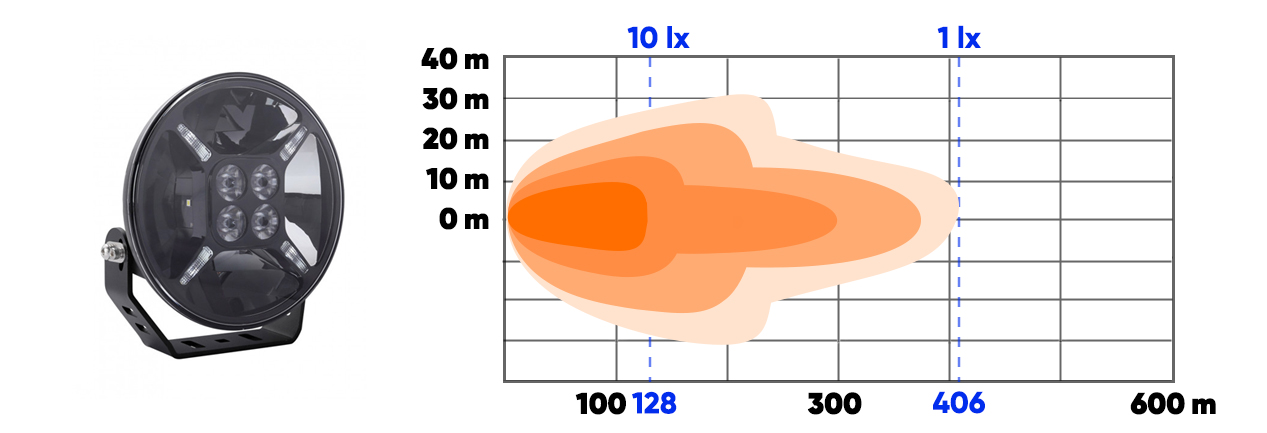 Article number: 930-EXP-D18-C-BL
 |
A smaller round auxiliary light with an appealing design. The light uses reflector technology and lens technology to create an excellent beam pattern that is both long and wide. Diameter: 180mm |
FOR9T Dragon Drive Auxiliary Light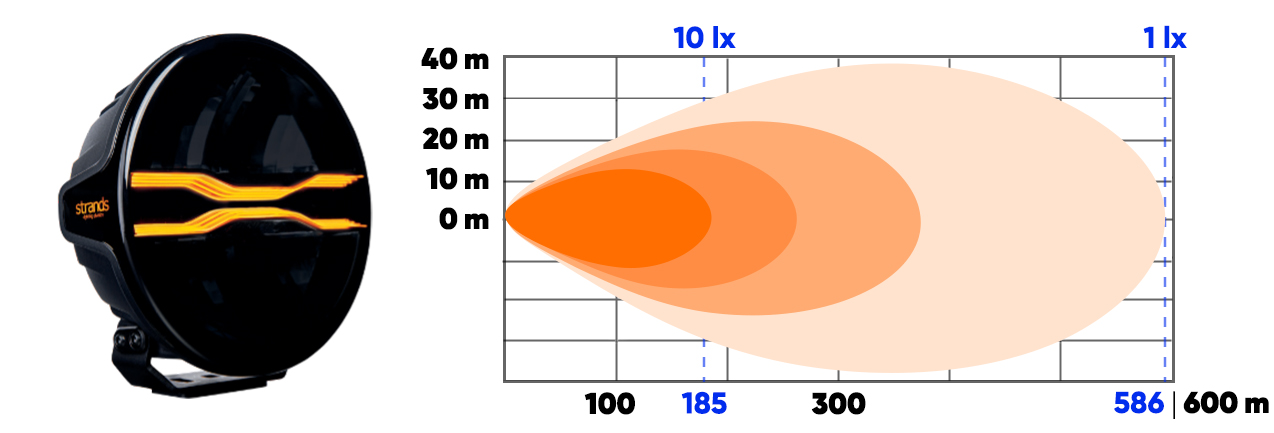 Article number: 930-F9T-DD Article number: 930-F9T-DD |
FOR9T combines functionality and technology with unique design. Dragon Drive has white and orange position lights, a large reflector with a hexagon pattern for high visibility, and an elegant black design. With robust construction and long range, Dragon Drive is the perfect auxiliary light for night-time adventures. Diameter: 220mm |
PLACEMENT AND INSTALLATION
At the moment, it is popular to place the auxiliary light in the lower grille, which is stylish but has one drawback. If the road is uneven, you get a lot of shadows and this can contribute to a slight feeling of motion sickness. It is also the case that the higher a lamp is mounted, the further the light reaches without being obstructed by irregularities in/on the road. We try to place our model-specific brackets as high up as possible on the front of the vehicle to achieve optimal light. Also note that in Sweden it is prohibited to mount anything on the front of the car that protrudes more than 30 mm above the front edge of the bonnet.
Another popular location is the roof of the vehicle, which is preferable when driving on uneven roads. However, the light may shine down onto the bonnet and in some cases the dashboard, which means that you as the driver risk being dazzled. We therefore recommend that the lamp be mounted at least 20 cm in from the top edge of the windscreen, measured on the roof. A roof-mounted light can also be difficult to use in rain and snow because the light is reflected by raindrops/snowflakes and bounces back toward you at an angle that becomes more disturbing. Also keep in mind that this type of installation may contribute to wind noise.
Which placement is best?
It is up to you as the driver to decide, but the most comfortable option is to have the light at the same height as the vehicle’s original lights.
AUXILIARY LIGHTS AND MODERN VEHICLE SENSORS
When installing an auxiliary light, it is important to know where the vehicle’s sensors are located in order to avoid covering them. Below are some examples of sensors that may be affected when installing auxiliary lights.
Parking sensors
The sensors are usually at least 4 in number and mounted in the bumper. These send out microwaves up to approximately 3 metres from the vehicle, which “bounce” off objects and then return to the parking sensor. This allows a computer/control unit in the vehicle to calculate the distance to an object in front and thereby warn the driver with sound and sometimes also visually to avoid a collision.
Radar
The radar is usually located in the centre of the grille behind a protective plastic cover (sometimes even behind the vehicle emblem). A radar uses the same technology as a parking sensor, but sends microwaves further and can thereby “detect” other vehicles in front of the car. The information is then sent to a control unit connected to the adaptive cruise control and the vehicle’s automatic emergency braking system. This means that when cruise control is activated, the vehicle can maintain the same speed as the vehicle in front and reduce speed when needed. It can also automatically brake the vehicle to a standstill if an obstacle has been detected and the driver does not react quickly enough. If a radar is blocked by an auxiliary light, this will usually result in a warning and fault code in the vehicle. You also disable a life-saving feature that all new cars sold within the EU are required to be equipped with.
In short – always make sure that the radar is not blocked. Work System’s model-specific brackets for auxiliary lights are developed not to interfere with the radar.
Camera
The camera is used for a range of things, but one of its most important tasks is to detect pedestrians and cyclists who are about to collide with the vehicle and emergency brake the car if the driver does not react quickly enough. The camera is usually located above the rear-view mirror on the inside of the windscreen and is therefore difficult to accidentally block with an auxiliary light. However, it can be good to know this if you are planning to mount lamps at the very front of the vehicle roof, since they should not protrude down in front of the windscreen.
Parking camera
A parking camera can be located in the grille and is intended to help the driver see any obstacles in front of the vehicle while parking. If you cover it with an auxiliary light, you as the driver will not be able to benefit from this effective aid.
Sensors together with LARGER round auxiliary lights
It can be difficult to create an installation with larger round auxiliary lights without affecting the vehicle’s sensors. If you are unsure, a sales representative/technician should inspect the vehicle before you order auxiliary lights. A model-specific kit for recessed auxiliary lights is a safe option. If you want as much light as possible and avoid interfering with the vehicle’s safety functions, roof mounting is, as mentioned earlier, a good alternative. However, think about how the lamps are to be mounted on the roof – we recommend using roof racks.
WHAT IS NEEDED TO CONNECT AN AUXILIARY LIGHT TO A MODERN VEHICLE?
The traditional method is to use a relay to draw power directly from the vehicle’s battery, which then powers the auxiliary lights. The relay detects the current (12 volts) sent to the vehicle’s original high beam and then activates the auxiliary lights as well. Today, many modern vehicles control the original headlamps using digital signals via a control unit located in or directly adjacent to the headlamp. These signals usually have a lower voltage than 3 volts and are sent as very fast pulses (CAN bus), which an auxiliary light relay cannot detect. In that case, a decoder is needed that can read these signals and provide the auxiliary light relay with a steady 12-volt signal when the high beam is activated. This decoder is usually called a CAN bus interface, CAN bus reader or CAN bus relay.
HOW DO I KNOW IF CAN BUS IS REQUIRED?
As a rule of thumb, if the vehicle has traditional bulbs (halogen), no CAN bus is required. If the vehicle is instead equipped with xenon lamps or the now common LED headlamps, you generally need to supplement the installation with a CAN bus interface in addition to the regular relay/cable kit.
THREE DIFFERENT WAYS TO INSTALL A CAN BUS INTERFACE
Directly on the vehicle’s CAN bus cables.jpg) Article number: 930-CAN-4 |
You connect a CAN bus interface directly to the vehicle’s CAN bus cables (CAN High & CAN Low) using, for example, heat-shrink butt connectors. This type of installation can be carried out by any skilled fitter/technician, but it may affect the warranty on the vehicle’s electrical system. An alternative is to connect the wiring using 3M quick splice connectors with double cutting blades. That way, you avoid cutting into the vehicle’s original cables and affecting the vehicle warranty. This product has a lower price than our other options, but requires more installation time because it must be mounted inside the cabin with cabling routed out to the auxiliary light relay in the engine compartment. There are also versions of the CAN bus interface that can handle several signals such as auxiliary lights, ignition power, reverse lights and parking lights. Perfect for larger installations where several different signals need to be used. |
Inductive reading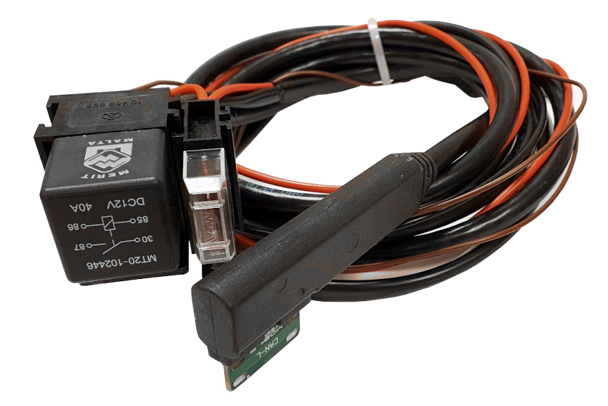 Article number: 930-CANKEY |
By mounting a “ring” around each CAN bus cable (CAN High & CAN Low) in the engine compartment, a skilled fitter/technician can take the signal directly from the headlamp’s CAN bus cables and power the auxiliary light without a traditional relay. Since the reading is inductive, no damage is done to the cable or its insulation, which means the warranty is preserved. The price of this product is slightly higher, but in return you get a complete product with everything you need. It is also somewhat faster to install. |
CAN Bus XBB Dongle & Power Unit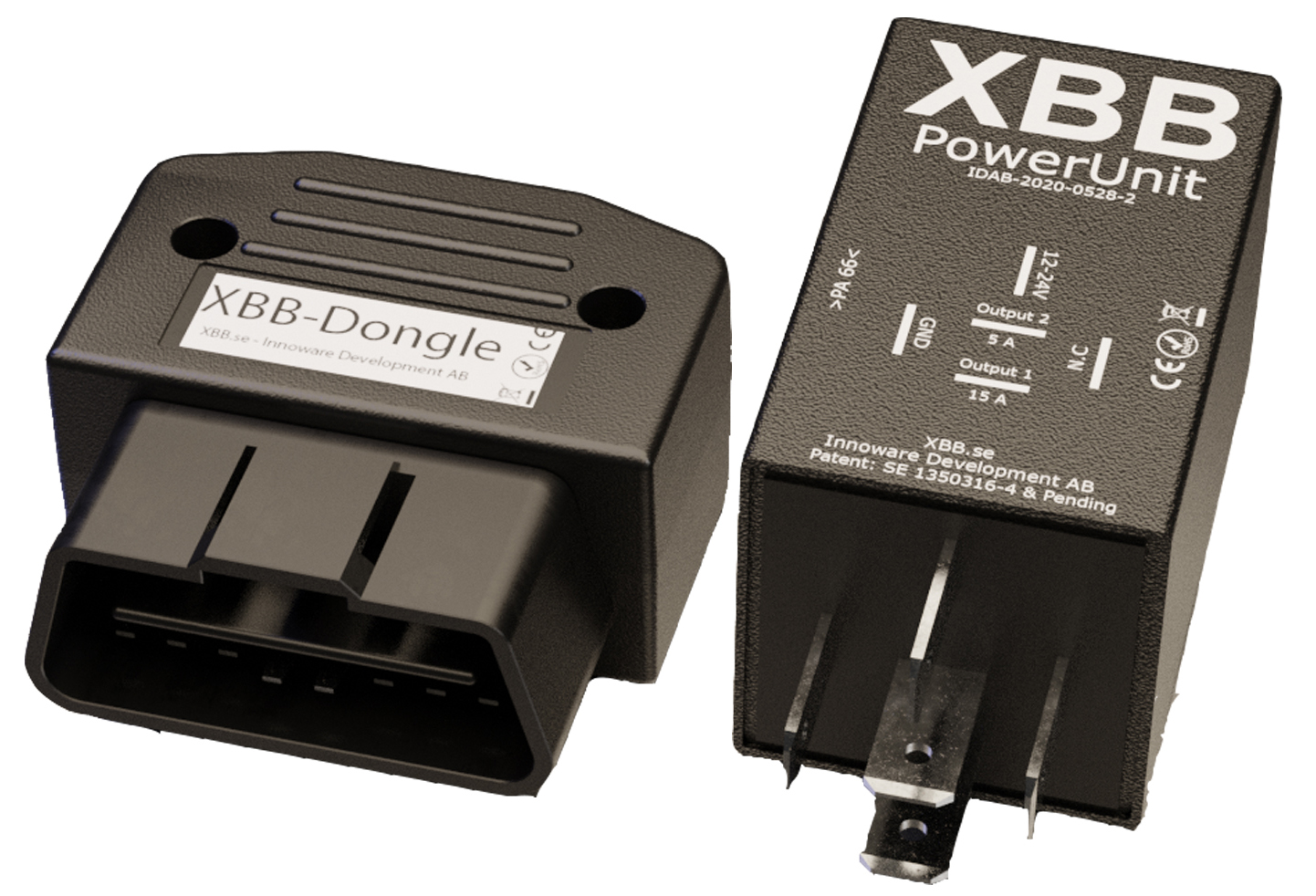 Article number: 930-2314987 |
The dongle is connected to the vehicle’s OBDII port (On-Board Diagnostic II), which reads the vehicle’s CAN bus signals and sends a wireless signal via Bluetooth to the auxiliary light relay that turns on the auxiliary light. Perfect for those who do not have as much experience with vehicle electronics as an experienced fitter/technician. In some cases, it is also a necessary solution in order to interpret CAN bus signals in vehicles where the light is controlled by a high beam assistant (for example Mercedes Vito). NOTE! Make sure to check that the OBDII port is not already occupied by another product, such as an electronic driving log. If several devices need access to the port, an OBD splitter adapter (Y-splitter) is required. This product is slightly more expensive, but it is complete and can control two functions such as auxiliary lights and reverse lights or parking lights. You save installation time because you do not need to locate the vehicle’s CAN bus cables or run cable between the sensor and the auxiliary light relay. For everything to work correctly, the fitter/technician needs to download an app to program the XBB dongle for the specific vehicle model. As an option, a wireless Bluetooth button can be installed to start functions without the vehicle system being on, for example to switch on auxiliary lights or reverse lights when the vehicle is switched off. |